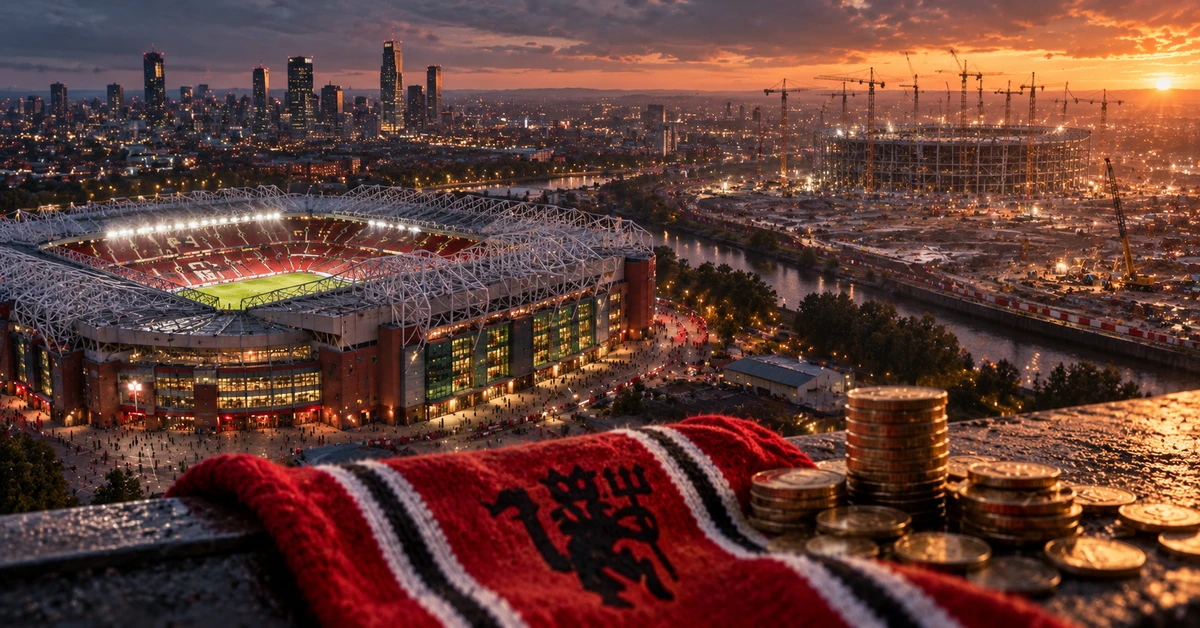











Manchester United continue to carry more than £1bn in overall financial obligations despite generating record revenue and returning to an operating profit, according to analysis of the club’s latest accounts. BBC Manchester United reporter Simon Stone calculates that the total remains above £1bn once United’s historic borrowings, revolving credit facility and substantial outstanding transfer liabilities are considered together.
The figure provides a very different perspective on financial results that otherwise contain several signs of improvement. United reported record annual revenue of £677.6m for the year, while the club’s cost-cutting programme contributed to a significant improvement in its operating performance.
That progress has not eliminated the financial burden accumulated on the balance sheet. Stone’s analysis identifies £577.6m of historic non-current borrowings alongside £111.4m outstanding on United’s revolving credit facility. Those two elements alone leave the club carrying almost £690m before money owed on previous transfer activity is considered.
Transfer liabilities add substantially to the picture. United’s accounts record £473m within trade and other payables, and club sources told Stone that approximately 75% of that amount relates to outstanding transfer payments, reflecting the way modern football deals are frequently structured through instalments paid across several years.
Those liabilities are different in nature from conventional bank borrowing, so treating the entire £1bn-plus figure as a single category of financial debt would be misleading. But they still represent commitments United must fund, which is why the broader calculation matters.
Record revenue demonstrates the enormous amount of money the club continues to generate, while the balance sheet shows how much of its financial capacity is already committed. United’s official FY2026 results provide further evidence of the pressure.
Non-current borrowings increased during the year as the club refinanced and added $125m to its senior secured borrowing, taking the total from $650m to $775m. Finance costs also increased sharply, with net finance costs rising from £21.2m to around £69.6m during the financial year.
The club was investing at the same time. United spent £63.5m acquiring land connected with the proposed stadium and wider Old Trafford regeneration project, an investment intended to support one of the most ambitious infrastructure projects in English football.
That creates an important contrast in the accounts. United’s underlying business remains capable of producing extraordinary revenue, cost reductions are improving operating performance, and the club has demonstrated that it can continue investing in players and infrastructure. But those improvements exist alongside substantial borrowing and future payment obligations.
The proposed new stadium makes that particularly relevant. United’s plans envisage a potential 100,000-seat ground as part of the wider regeneration of the Trafford Wharfside area, and whatever final financing structure is chosen, delivering a project of that scale is likely to require access to substantial additional capital.
The club therefore enters that process from a position in which its existing financial commitments are already significant. None of this means United are generating too little money, with the record £677.6m revenue figure demonstrating precisely the opposite.
The issue is how much financial flexibility remains once existing borrowing, financing costs, transfer instalments and future infrastructure requirements are considered together. United’s latest accounts consequently tell two stories at the same time: the business is generating record revenue and its operating performance is improving, but the financial legacy sitting behind those results remains enormous.