








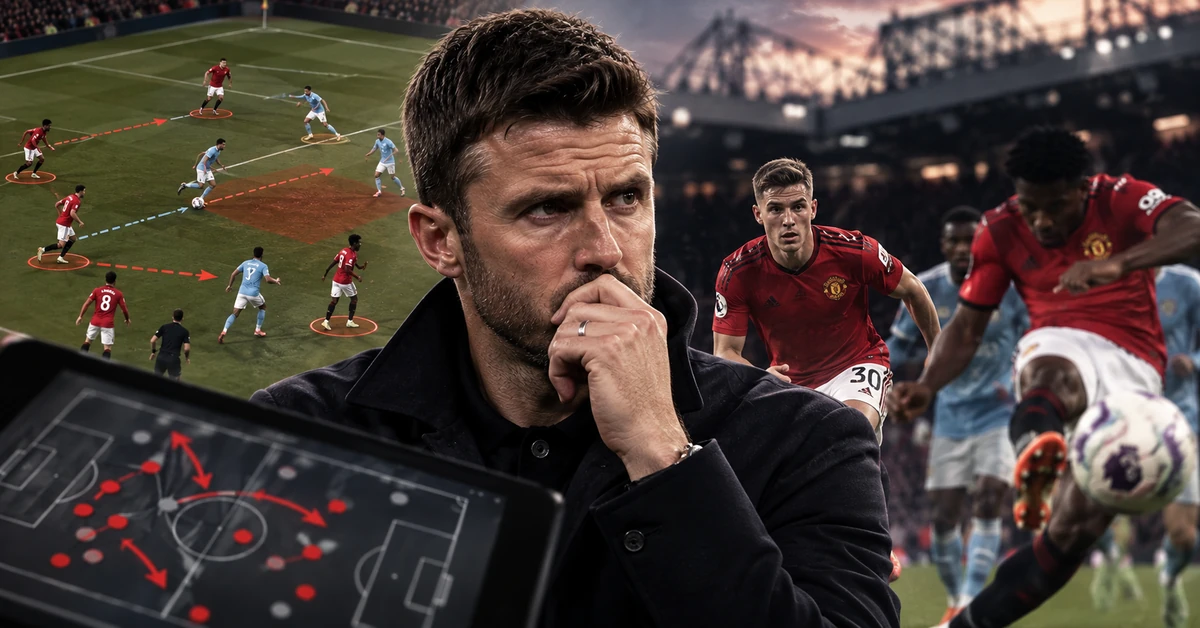
Manchester United have been joint-bottom among ever-present Premier League clubs for final-third regains since Michael Carrick took charge, according to analysis by The Athletic’s Liam Tharme. Speaking on The Athletic FC Podcast, the tactics writer highlighted United’s pressing as one of the underlying problems that has persisted despite the excellent results Carrick initially produced after returning to Old Trafford.
Tharme’s analysis suggests opponents are finding it too easy to play through United’s press. Rather than consistently recovering possession high up the pitch and immediately attacking a disorganised defence, United are allowing teams to progress beyond their first line of pressure.
The final-third regain numbers are particularly striking. Tharme says United rank joint-bottom among clubs that have remained continuously in the Premier League during Carrick’s time in charge.
That provides another layer to the debate surrounding United’s physical performance. Recent GeniusIQ data has already placed Carrick’s team bottom of the Premier League across four high-intensity running measures this season, but pressing successfully is not simply a question of running farther or sprinting more often. Where players run, when they press and whether teammates move together can be just as important.
Tharme’s analysis therefore points towards a structural problem rather than simply accusing United’s players of lacking effort. If the press is poorly coordinated, additional running alone will not necessarily make it more effective.
There are problems at the other end of the pitch too. Tharme says he has compiled more than 30 video examples of United players taking low-percentage shots when better passing options were available. Those situations include occasions when Benjamin Šeško has made potentially useful runs but has not received the ball.
That raises questions about United’s decision-making in attacking areas. Carrick’s side can produce respectable headline attacking numbers, including expected goals, but Tharme argues those figures need context. Some of United’s attacking output has been generated during unusually open matches rather than through consistently effective structured possession.
A team can therefore accumulate shots and xG without necessarily demonstrating that its attacking system is functioning particularly well. The distinction is important when assessing United’s start to the season because strong statistical totals can conceal weaknesses in how chances are actually being created.
Tharme’s assessment is that United still have problems both when attempting to win the ball high up the pitch and when trying to break opponents down with controlled possession. The Šeško examples are particularly relevant because making the most of a specialist centre-forward requires teammates to recognise his movement and choose the pass rather than repeatedly taking lower-percentage shots themselves.
Combined with the pressing numbers, that creates a more complicated picture than the recent debate about whether United’s players simply need to run more. Carrick’s side may need greater intensity, but intensity without coordination does not automatically produce an effective press. Likewise, generating a high volume of attacking actions does not necessarily mean United are consistently making good decisions around the penalty area.
The international break gives Carrick almost three weeks to address those issues before United return against Tottenham on 10 October. Much of the public debate will inevitably remain focused on results and whether Carrick is under pressure, but Tharme’s analysis identifies something more specific for the manager to solve.
United need to become harder to play through when they press and more intelligent with the ball when they reach dangerous areas.